
Access Shift: White House Deliberately Sidelines Mainstream Media Outlets And Elevates MAGA Propagandists To Spread The Trump Gospel

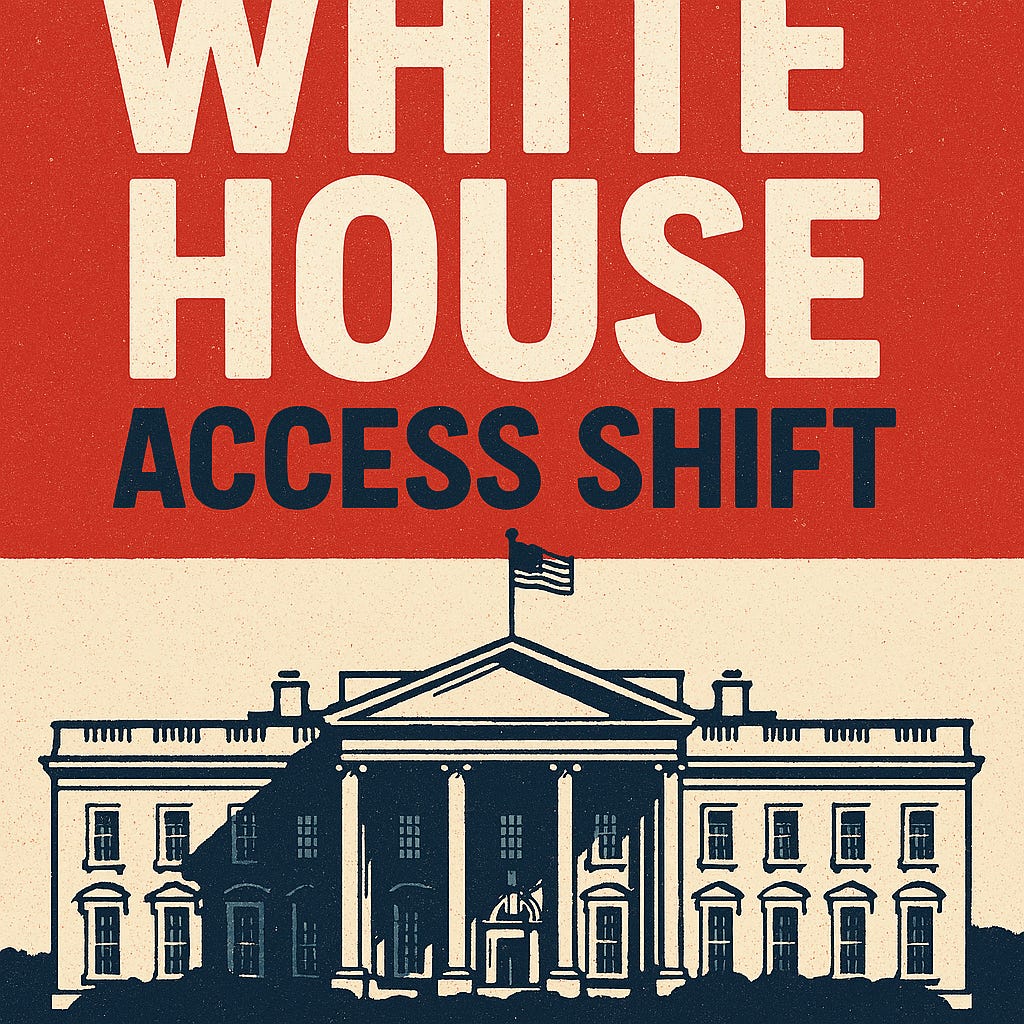
A defining feature of the current media landscape is a deliberate reshaping of access: the Trump White House has elevated MAGA‑aligned outlets and influencers while constraining some mainstream institutions, building a tighter feedback loop between official messaging and sympathetic media. Documented changes include direct White House control over the press pool, targeted exclusions, and the formalization of a “new media” pathway that prioritizes influencers and partisan brands.
Gatekeeping shifts inside government
The administration moved core gatekeeping functions in‑house, asserting control over which outlets enter the pool—a duty historically managed by the White House Correspondents’ Association. In parallel, it curtailed Associated Press access in key spaces, and federal departments adopted “rotation” policies that displaced legacy outlets (e.g., NBC, The New York Times, NPR, Politico) to make room for brands like the New York Post, One America News Network, and Breitbart. These steps structurally advantage ideologically aligned coverage and diminish routine scrutiny from long‑standing national desks.
The “new media” seat and influencer integration
A dedicated “new media” seat at briefings opened a pipeline for independent creators, podcasters, and overtly partisan commentators to enter the room. This policy shift gives viral‑first actors the imprimatur of official access, enabling rapid content cycles—clips from briefings are packaged for social feeds, where they circulate among aligned audiences with minimal editorial friction.
Message alignment and the amplification machine
The mutually reinforcing relationship between Trump and friendly outlets predates the current term—his first administration hired scores of alumni from Fox’s ecosystem and regularly echoed network talking points. That dynamic has been re‑energized, now buttressed by formal access changes that speed the relay from podium to partisan feed. Research and commentary describe a mature “right‑wing misinformation machine,” in which sensational claims are optimized for virality and repeated across platforms until they displace corrections. Examples highlighted include distortions about scientific research (e.g., “transgender mice”) and social programs, as well as measurable belief gaps among audiences reliant on right‑wing sources.
Official rhetoric that delegitimizes critics
Alongside access engineering, official channels intensify an “us vs. them” narrative that labels mainstream reporting as hoaxes and frames adversarial coverage as coordinated attacks. A White House article catalogs dozens of alleged “fake news” incidents and casts fact‑checking as dishonest, positioning the administration as sole arbiter of truth and reinforcing the loyal media’s role as validator and amplifier.
Consequences for the information environment
• Agenda setting: Prioritized outlets steer the question slate toward culture‑war storylines and away from complex policy scrutiny, shaping what the public hears first and most often.
• Velocity over verification: Influencer distribution compresses the verification window; clips move from briefing to millions of feeds in minutes, locking in first impressions before corrections land.
• Erosion of shared facts: Repetition inside an aligned ecosystem makes contested claims feel “common sense,” widening belief gaps on core issues and hardening echo chambers.
• Institutional pressure: By rewarding friendly coverage with access—and punishing adversarial reporting—government signals that journalistic watchdog roles carry increasing costs.
What to watch next
• Pool gatekeeping: Whether direct White House control over the pool becomes permanent policy or faces successful pushback from press associations.
• Rotations beyond the Pentagon: If other agencies adopt “rotation” schemes that systematically sideline legacy desks in favor of aligned outlets.
• Influencer credentialing: Expansion of the “new media” seat and criteria used to vet partisan creators for briefing access.
• Narrative escalation: Use of official channels to brand mainstream reporting as hoaxes, deepening distrust and rallying loyal media around preferred frames.
• Cross‑platform synchronization: How quickly briefing talking points appear across broadcast, streaming, newsletters, and social video, and whether corrections penetrate the same networks.
In short: structural gatekeeping plus influencer‑optimized distribution produces a durable loop—access begets amplification, which begets legitimacy, which in turn justifies more access.
George Froehlich
Editor - Fourth Estate Convulsions